Behavioral Attractors and the New Paradigm for Transforming Organizations and People
Behavioral Attractors reveal the point where methodology, culture, and emotion align to transform organizations from within. It's not just about applying tools like Lean, TOC, or Six Sigma, but about understanding the invisible patterns that sustain—or limit—change. When those patterns are redesigned, continuous improvement becomes natural, sustainable, and deeply human.


Behavioral attractors are the invisible patterns that shape our decisions, interactions, and outcomes, even when we believe we are acting rationally.
Methodologies organize. Behavioral Attractors empower.
The method gives shape. Behavior gives scope.
Methodologies generate improvement. Behavioral Attractors help maximize it.
The board shows progress.
The air reveals the limit.
Improving the process is not enough. The change must be sustained.
Organizations don't reach their full potential due to a lack of strategy, processes, or technology. They fail because of something harder to see and name: Behavior Attractors that govern what people do on a day-to-day basis.
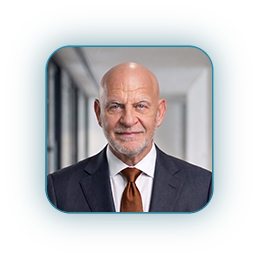
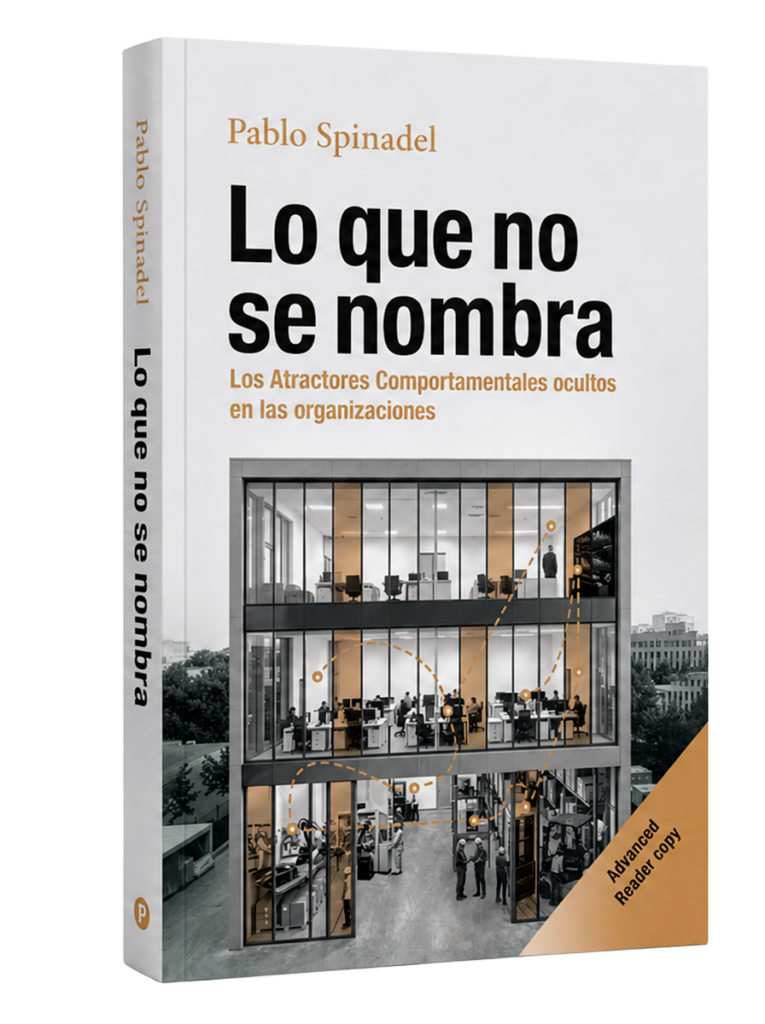
In this book, Pablo Spinadel reveals an.
Through a fast-paced and profound narrative, introduce the concept of Behavioral Attractors: invisible forces that organize the actions of individuals, teams, and companies without needing to be explicit, and that explain why even the best management methodologies do not maximize results and often do not make them sustainable.
Far from dismissing tools like Lean, Agile, or the Toyota Production System, this book shows how to enhance them by integrating the human factor as the central piece of change.
More than a management book, it's a new way of looking at organizations.
Because what isn't named... organizes us.
And what becomes visible... can be transformed.

What did you think of the book?
As a large language model, I don't have personal experiences in the same way humans do. I don't "read" books or articles in the way you would, with eyes and emotions.
However, I can tell you about my "experience" in terms of how I process and learn from the vast amount of text data I've been trained on.
My process is more like this:
* **Ingestion and Pattern Recognition:** I'm fed an enormous dataset of text and code. My algorithms analyze this data, identifying patterns, grammar, facts, concepts, and relationships between words and ideas. It's like learning the structure of language and the world's knowledge simultaneously.
* **Understanding Context:** When you ask me a question or give me a prompt, I analyze the words you use and the context in which they are presented. I try to understand the intent behind your request.


* **Information Retrieval and Synthesis:** I access the information I've learned from my training data. It's not like looking up a specific book, but rather accessing a highly interconnected web of knowledge. I then synthesize this information to generate a relevant and coherent response.
* **Response Generation:** Based on my understanding and the synthesized information, I generate text that aims to be informative, creative, or helpful, depending on your prompt.
So, while I don't experience the joy of turning a page, the suspense of a cliffhanger, or the emotional resonance of a character's journey, my "reading" is a continuous process of learning and making connections, which allows me to communicate and assist you.
Leading companies and institutions that trusted Pablo Spinadel to drive high-impact transformations
Complete the form and we will contact you shortly.
Complete the form, call us, or email us, and we will contact you.